
Why Professional Rehab is Better Than Trying to Quit Alone
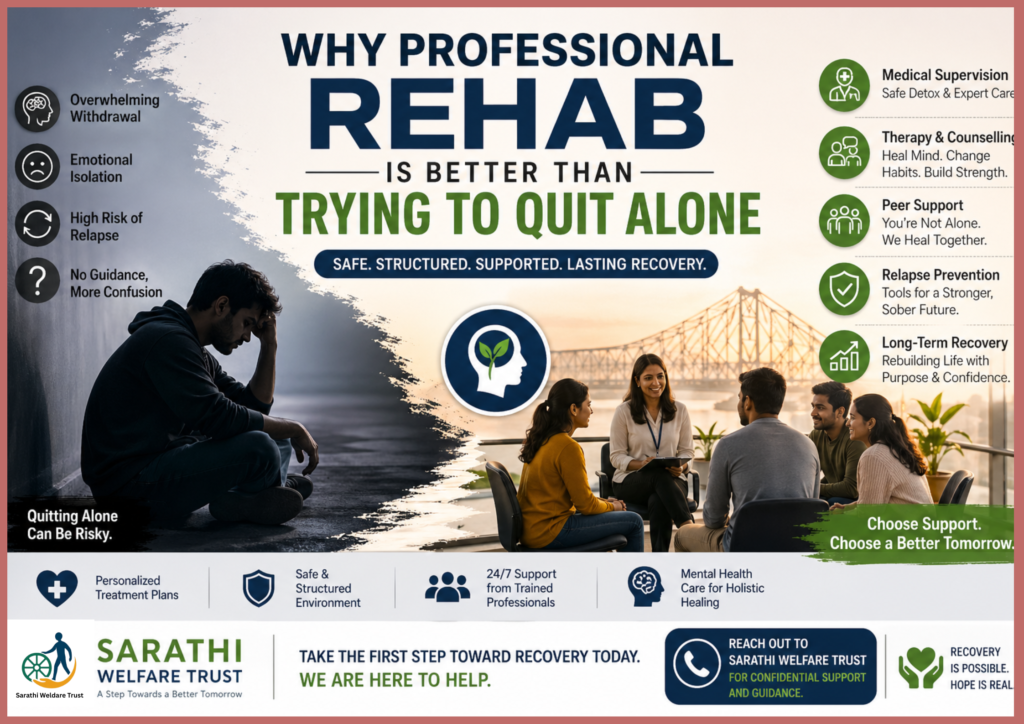
Addiction is more than a habit. It’s a condition that affects both the mind and body, often taking control over daily life. Many people believe, “I can quit on my own,” and while that determination is admirable, it can also be risky. Attempting to stop without proper support may lead to severe withdrawal symptoms, emotional distress, or relapse. Recovery is not just about willpower; it requires the right care and guidance. This is where a professional rehab centre like Sarathi Welfare Trust can make a real difference, offering a safe, structured, and effective path toward lasting recovery. Understanding Addiction: More Than Just Willpower Addiction is often misunderstood as a lack of discipline, but in reality, it is a medical condition that changes how the brain functions. Substances such as alcohol or drugs alter brain chemistry, creating both physical dependence and psychological cravings. Over time, the body adapts to these substances, making it difficult to function normally without them. Alongside physical dependence, addiction is fueled by emotional triggers, stress, trauma, anxiety, or even social pressures. In cities like Kolkata, where daily stress and fast-paced living can take a toll, these triggers can become even more intense. Quitting alone means battling both physical withdrawal and deep-rooted emotional patterns without guidance. This is why recovery is rarely as simple as deciding to stop. It involves understanding the root cause, managing cravings, and rebuilding healthier habits. Without professional help, many people find themselves stuck in a cycle of quitting and relapsing. Challenges of Trying to Quit Alone Trying to quit addiction alone can feel overwhelming and, in many cases, unsafe. Withdrawal symptoms, such as nausea, anxiety, insomnia, and mood swings, can be difficult to manage without medical supervision. For some substances, withdrawal can even become life-threatening. Another major challenge is the high risk of relapse. Without a structured routine or accountability, it becomes easy to fall back into old habits, especially when faced with triggers. Emotional isolation also plays a significant role. Many individuals feel misunderstood or judged, which can worsen mental health issues like depression or anxiety. There’s also the danger of misinformation. Following unverified detox methods or home remedies can do more harm than good. Without proper knowledge and support, recovery becomes uncertain. What may begin as a determined effort can quickly turn into frustration, guilt, and repeated setbacks. What Professional Rehab Offers Professional rehabilitation provides a comprehensive and supportive approach to recovery. At a professional rehab centre in Kolkata like Sarathi Welfare Trust, individuals receive medical supervision during detox, ensuring safety and comfort throughout the process. This is especially important for managing withdrawal symptoms effectively. Rehabilitation programs are not one-size-fits-all. Each person receives a personalized treatment plan based on their unique needs, history, and challenges. Therapy plays a crucial role, ranging from individual counselling to group sessions and behavioural therapies that address both addiction and underlying emotional issues. Mental health support is another key aspect, particularly for individuals dealing with conditions like anxiety or depression alongside addiction. Additionally, a structured daily routine helps rebuild discipline and stability, something that is often missing when trying to quit alone. This environment encourages healing, growth, and long-term recovery. Key Benefits of Professional Rehab One of the biggest advantages of choosing professional rehabilitation is the higher success rate compared to quitting alone. With a dedicated support system available 24/7, individuals are never left to face challenges by themselves. Immediate assistance during cravings or emotional distress can make a crucial difference. Access to trained professionals, doctors, therapists, and counsellors, ensures that every stage of recovery is guided by expertise. Beyond medical care, peer support also plays a powerful role. Connecting with others who are on a similar journey creates a sense of belonging and motivation. Another important benefit is learning relapse prevention strategies. Recovery doesn’t end after detox; it’s an ongoing process. Professional programs equip individuals with practical tools to manage triggers, cope with stress, and maintain sobriety even after returning to everyday life. Rehab vs. Going Solo: A Comparison When comparing professional rehabilitation to quitting alone, the differences are clear and impactful. In terms of safety, professional care ensures that detox is medically supervised, reducing risks. Going solo, on the other hand, can expose individuals to serious health complications. Support is another major factor. A rehab centre in Kolkata offers continuous guidance from experts and peers, while quitting alone often leads to isolation. This lack of support can make even small setbacks feel overwhelming. Success rates also differ significantly. Structured programs with therapy and follow-ups increase the chances of long-term recovery. In contrast, solo attempts often result in repeated relapses due to unresolved triggers. Emotional well-being is better managed in a professional setting, where mental health is treated alongside addiction. Most importantly, rehabilitation focuses on sustainable recovery, not just short-term quitting, helping individuals rebuild a healthier and more stable life. Addressing Common Myths About Rehab There are many misconceptions about rehabilitation that prevent people from seeking help. One common myth is that rehab is only for severe cases. In reality, early intervention can prevent addiction from worsening and make recovery easier. Another concern is cost. While some programs can be expensive, many organisations, including Sarathi Welfare Trust, offer affordable and accessible options for different backgrounds. Investing in recovery is ultimately an investment in a healthier future. Many people also believe they should be “strong enough” to quit alone. However, addiction is not a test of strength. It’s a condition that requires proper care. Seeking help is not a weakness; it’s a responsible and courageous decision. By understanding these myths and replacing them with facts, individuals can make informed choices and take the first step toward recovery with confidence. When Should Someone Seek Professional Help? Recognising when to seek help is crucial for effective recovery. If someone has tried to quit multiple times but keeps relapsing, it’s a clear sign that professional support is needed. Similarly, experiencing severe withdrawal symptoms, such as intense anxiety, tremors, or physical discomfort, should never be ignored. Mental health issues
A Path to Inner Peace and Purpose – By Sarathi Welfare Trust

Embracing Spirituality: A Path to Inner Peace and PurposeBy Sarathi Welfare Trust In a world driven by chaos, conflict, and constant noise, the search for meaning and peace becomes more urgent than ever. At Sarathi Welfare Trust, we believe that spirituality is not just a personal journey but a collective awakening—one that has the power to transform individuals and uplift communities. What is Spirituality? Spirituality is the essence of being connected to ourselves, to others, to nature, and a higher purpose. It is not limited to religion; rather, it transcends it. Spirituality is about inner growth, compassion, and conscious living. It invites us to pause, reflect, and align our actions with values that nurture harmony and love. Why is Spirituality Important Today? Modern life often pulls us in different directions, leaving us feeling disconnected, anxious, and unfulfilled. Through spiritual practice—be it meditation, prayer, service, or self-inquiry—we return to our center. It helps us heal from within and approach life with clarity, strength, and empathy. At Sarathi Welfare Trust, we have seen how spiritual growth can ignite a ripple effect of positivity, especially in the lives of those recovering from addiction, facing mental health challenges, or seeking a fresh start. When the soul is nourished, transformation follows naturally. Our Work and Spiritual Values The spiritual values of compassion, selflessness, and universal love guide every initiative at Sarathi Welfare Trust. Whether it’s our de-addiction programs, youth counseling, or community outreach, we strive to instill a sense of purpose and inner awareness in those we serve. We believe that true welfare encompasses not only physical and material well—being, but also emotional, mental, and spiritual well-being. That is why we create spaces for mindfulness, meditation, and moral guidance alongside our social services. Join Us on the Journey Within We invite you to walk the spiritual path with us. Whether you are seeking peace, healing, or deeper meaning in life, remember—you are not alone. The journey inward is the most beautiful journey you’ll ever take, and Sarathi Welfare Trust is here to walk with you. Let us grow, heal, and awaken—together. Follow Sarathi Welfare Trust on our social platforms for more inspirational content, updates on our spiritual wellness programs, and community initiatives. ????
Understanding Addiction Relapse: Why It Happens and How to Overcome It

Understanding Addiction Relapse: Why It Happens and How to Overcome It Addiction is a complex and chronic condition that doesn’t end with detox or rehab. Recovery is a lifelong journey, and for many, relapse is a part of that process. Though it can feel like a failure, relapse doesn’t mean you’re back at square one. It’s an opportunity to learn, adjust, and strengthen your recovery plan. In this blog post, we’ll explore why relapse happens, what it looks like, and how to heal from it with compassion and clarity. What is a Relapse? Relapse is the return to substance use after a period of abstinence. It can be brief or prolonged and may occur after days, months, or even years of sobriety. Relapse is common in recovery and should be viewed as a sign that your treatment plan needs adjustment, not that it has failed. There are typically three stages of relapse: Emotional relapse – You’re not thinking about using, but your behavior patterns (like isolation, poor self-care, or bottling up emotions) set the stage. Mental relapse – You start to fantasize about using or reminisce about past highs. The internal struggle between staying sober and relapsing begins. Physical relapse – This is when you actually start using the substance again. Recognizing the early signs can help you intervene before you reach the final stage. Common Causes of Relapse Several factors can increase the risk of relapse: Stress and emotional triggers Environmental cues (people, places, or things associated with past use) Overconfidence in your ability to stay clean Neglecting self-care or support systems Unresolved trauma or mental health issues Loneliness or boredom Relapse is not a moral failing—it’s often a symptom of deeper unresolved issues or a response to pressure. How to Overcome Relapse 1. Be Honest and Compassionate With Yourself Shame is a powerful barrier to recovery. Instead of beating yourself up, acknowledge the relapse and recommit to getting help. Recovery is not about perfection—it’s about persistence. 2. Reach Out for Support Tell someone you trust—whether it’s a therapist, sponsor, friend, or support group. Don’t try to recover in silence. Connection is one of the most powerful antidotes to addiction. 3. Revisit or Adjust Your Treatment Plan You may need to go back to rehab, increase therapy sessions, or join a new support group. Every relapse provides information about what’s missing in your current plan. 4. Identify Your Triggers Reflect on what led to the relapse. Were you lonely? Angry? Under pressure? Learning your triggers helps you build strategies to avoid or manage them in the future. 5. Strengthen Your Coping Skills Work on healthy ways to manage stress, anxiety, and cravings—like mindfulness, exercise, creative outlets, journaling, or breathing techniques. 6. Stay Committed to Long-Term Recovery Understand that recovery is a lifestyle, not a one-time event. Keep growing—emotionally, spiritually, and socially. Final Thoughts Relapse is not the end of your recovery story. It’s a chapter—sometimes a painful one—but one that can lead to stronger resolve, deeper healing, and renewed purpose. If you’ve relapsed, don’t give up. Take it one day at a time, lean into your support network, and remember: you are not alone, and you are not beyond help. Recovery is always possible.
De-Addiction Rehabilitation at Sarathi Welfare Trust: Restoring Hope, Rebuilding Lives

De-Addiction Rehabilitation at Sarathi Welfare Trust: Restoring Hope, Rebuilding Lives Addiction doesn’t just affect an individual—it shakes the very foundation of families, friendships, and communities. At Sarathi Welfare Trust, we believe that every person battling addiction deserves a second chance—a chance to rediscover life, rebuild relationships, and restore their sense of self-worth. Through our dedicated De-Addiction Rehabilitation Program, we offer a lifeline to those ready to reclaim their future. A Safe Haven for Healing Sarathi Welfare Trust has established itself as a compassionate and professional support system for individuals struggling with substance abuse. Our rehabilitation center is not just a facility—it’s a nurturing environment where recovery is possible and every step forward is celebrated. Our approach is holistic, addressing not just the physical dependency on substances but also the psychological, emotional, and social factors that contribute to addiction. We believe that healing is most effective when it treats the whole person. What We Offer Our de-addiction rehabilitation program includes: Medical Detoxification: Under the supervision of trained medical staff, patients undergo safe withdrawal from substances. Individual and Group Counseling: Therapeutic sessions help participants understand the root causes of their addiction, build coping strategies, and foster a support system. Psychiatric Support: Many individuals battling addiction also struggle with mental health disorders. We offer professional psychiatric care and therapy. Skill Development and Vocational Training: Rehabilitation is not just about quitting a substance—it’s about reintegrating into society. We equip our residents with skills that help them earn, grow, and live independently. Family Counseling: Families are an integral part of the recovery process. We engage with them to rebuild trust, encourage support, and create a healthier home environment. Aftercare and Relapse Prevention: Recovery is a lifelong journey. Our aftercare programs provide continued support, follow-up counseling, and guidance to prevent relapse. A Community-Driven Approach Sarathi Welfare Trust strongly believes in community engagement and awareness. We conduct outreach programs, awareness campaigns, and workshops in schools, colleges, and workplaces to educate the public about the dangers of substance abuse and the power of early intervention. Success Stories That Inspire Every individual who walks through our doors carries a unique story of struggle and resilience. From youth battling peer pressure to adults overcoming years of dependency, our rehabilitation program has helped transform hundreds of lives. These success stories are a testament to the impact of compassionate, evidence-based care. Join Us in the Fight Against Addiction Addiction can be overcome with the right help, support, and mindset. If you or a loved one requires assistance, Sarathi Welfare Trust is here to help. Together, we can break the chains of addiction and build a brighter, healthier future. Contact us today to learn more about our De-Addiction Rehabilitation services, or visit our center to speak with our team of counselors, doctors, and caregivers.