Addiction, or substance dependence, is a condition where a person becomes physically and mentally reliant on drugs or alcohol. It doesn’t just affect the individual. It impacts families, careers, and emotional well-being. The journey to recovery often begins with detox, the first crucial step in clearing harmful substances from the body. However, many people mistakenly believe detox alone equals complete recovery.
In reality, it is just the starting point. This blog will guide you through what detox really involves, why it matters, and how it supports long-term healing in a safe and structured way.
What is Detox in Addiction Treatment?
Detoxification, commonly known as detox, is the process of removing toxic substances like alcohol or drugs from the body. It is the first physical step towards healing, allowing the body to stabilise after prolonged substance use.
Many people in Kolkata and nearby areas approach centres like Sarathi Welfare Trust seeking clarity on detox as part of addiction recovery treatment in Kolkata.
It’s important to understand that detox is not the same as rehabilitation. Detox focuses only on cleansing the body, while rehabilitation addresses the psychological and behavioural aspects of addiction. Without further therapy, the chances of relapse remain high. Detox prepares the body and mind for deeper healing, but lasting recovery requires counselling, support, and structured treatment beyond this phase.
Why Detox is Necessary
When someone becomes dependent on a substance, their body adapts to its presence. Suddenly stopping can trigger withdrawal symptoms, which can range from mild discomfort to severe health risks. This is why detox is necessary. It ensures a safer way to manage this transition.
In many cases, attempting to quit without medical supervision can lead to complications such as seizures, dehydration, or extreme anxiety. Professional support helps monitor these symptoms and provide relief when needed.
Beyond physical challenges, detox also brings emotional strain. Feelings of restlessness, mood swings, or fear are common. In a city like Kolkata, where daily stress and lifestyle pressures are high, structured detox care ensures individuals are not facing this difficult phase alone, making the process safer and more manageable.
Types of Detox Programs
Not all detox programs are the same, and choosing the right one depends on individual needs.
Medical detox involves supervision by trained healthcare professionals. It is ideal for individuals with severe dependency, as medications and monitoring help manage withdrawal safely.
Social detox focuses on emotional and peer support rather than intensive medical care. It is suitable for those with mild dependency who still benefit from a supportive environment.
Outpatient detox allows individuals to stay at home while attending regular check-ins at a centre like Sarathi Welfare Trust. This option works well for people who need flexibility due to work or family responsibilities.
Each program differs in intensity and support level, but all aim to provide a structured and safe beginning to recovery.
Stages of the Detox Process
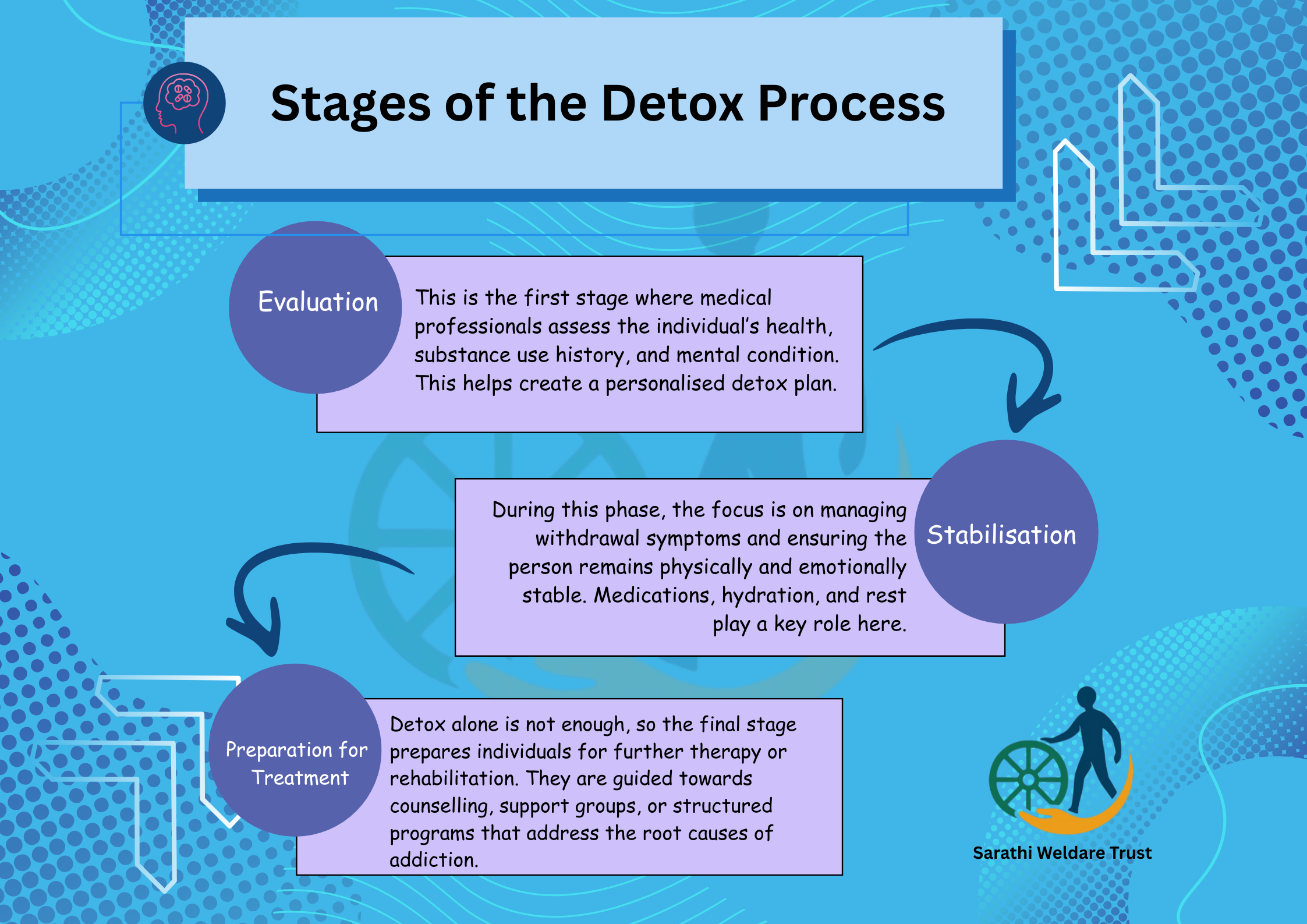
The detox process typically follows three important stages, each designed to support the individual step by step.
Evaluation: This is the first stage where medical professionals assess the individual’s health, substance use history, and mental condition. This helps create a personalised detox plan.
Stabilisation: During this phase, the focus is on managing withdrawal symptoms and ensuring the person remains physically and emotionally stable. Medications, hydration, and rest play a key role here.
Preparation for Treatment: Detox alone is not enough, so the final stage prepares individuals for further therapy or rehabilitation. They are guided towards counselling, support groups, or structured programs that address the root causes of addiction.
This step-by-step approach ensures safety, comfort, and readiness for long-term recovery.
Common Withdrawal Symptoms
Withdrawal symptoms can vary depending on the substance used and the duration of dependency. Physically, individuals may experience nausea, sweating, headaches, or tremors. These symptoms can be uncomfortable but are often manageable with proper care.
Emotionally, detox can be even more challenging. Anxiety, irritability, mood swings, and even depression are common. For some, cravings can feel overwhelming, making this stage particularly sensitive.
For substances like alcohol or opioids, withdrawal can sometimes become severe, requiring immediate medical attention. That’s why monitoring symptoms during detox is so important.
In a supportive environment like Sarathi Welfare Trust, individuals receive both medical and emotional care, helping them navigate these symptoms safely and with dignity.
How Long Does Detox Take?
One of the most common questions people ask is, “How long will detox take?” The answer is it varies. For some, detox may last a few days, while for others, it can extend to a couple of weeks.
Several factors influence this timeline. The type of substance plays a major role. For example, alcohol and opioids have different withdrawal patterns. The duration of use also matters. Long-term dependency usually requires a longer detox period. Additionally, an individual’s overall health and lifestyle can affect how quickly the body recovers.
It’s important not to compare one person’s journey with another’s. Detox is a personalised process, and rushing it can do more harm than good. A guided program ensures that recovery begins at the right pace.
Risks and Challenges of Detox
While detox is a necessary step, it does come with its own set of risks and challenges. Severe withdrawal symptoms can sometimes lead to complications, especially without medical supervision. This is why attempting detox alone at home is not recommended.
Another major challenge is the risk of relapse. During detox, cravings can be intense, and emotional vulnerability is high. Without proper support, individuals may return to substance use to escape discomfort.
There is also the mental aspect. Feelings of fear, guilt, or hopelessness can surface during this phase. Professional care helps manage both physical and emotional difficulties, reducing risks and improving outcomes.
Choosing a trusted centre like Sarathi Welfare Trust ensures that individuals receive the guidance and care they need during this critical phase.
What Happens After Detox?
Detox is just the beginning of the recovery journey. Once the body is free from substances, the next step is to address the underlying causes of addiction. This is where therapy and rehabilitation come in.
Counselling sessions help individuals understand triggers, manage stress, and build healthier habits. Behavioral therapies focus on changing thought patterns and developing coping strategies. Support groups also play an important role, offering a sense of community and shared understanding.
Aftercare programs ensure continued support even after formal addiction recovery treatment in Kolkata ends. This helps individuals stay on track and avoid relapse.
At Sarathi Welfare Trust, the focus is on guiding individuals beyond detox, helping them rebuild their lives with confidence and stability.
Tips for Supporting Someone Through Detox
Supporting a loved one through detox requires patience, empathy, and understanding. Avoid judging or blaming them, as this can make the process harder. Instead, create a safe and supportive environment where they feel comfortable opening up.
Encourage them to seek professional help rather than trying to manage detox alone. Small gestures, like checking in regularly or helping with daily tasks, can make a big difference.
It’s also important to avoid triggers, situations or environments that may tempt them to use substances again.
Most importantly, offer emotional support. Sometimes, just being present and listening without interruption can provide immense comfort. Your support can play a crucial role in their recovery journey.
Detox is a vital first step in overcoming addiction, but it is not the complete solution. It prepares the body and mind for deeper healing through therapy and ongoing care. Recovery is a long-term journey that requires commitment, support, and the right guidance.
If you or a loved one is struggling, remember that help is available. Taking the first step can feel difficult, but it can change everything. Reach out to Sarathi Welfare Trust today and begin a safe, supportive path towards a healthier and more fulfilling life.